


 Home > Sairem’s products > Machines >
MicroChem, laboratory microwave reactor
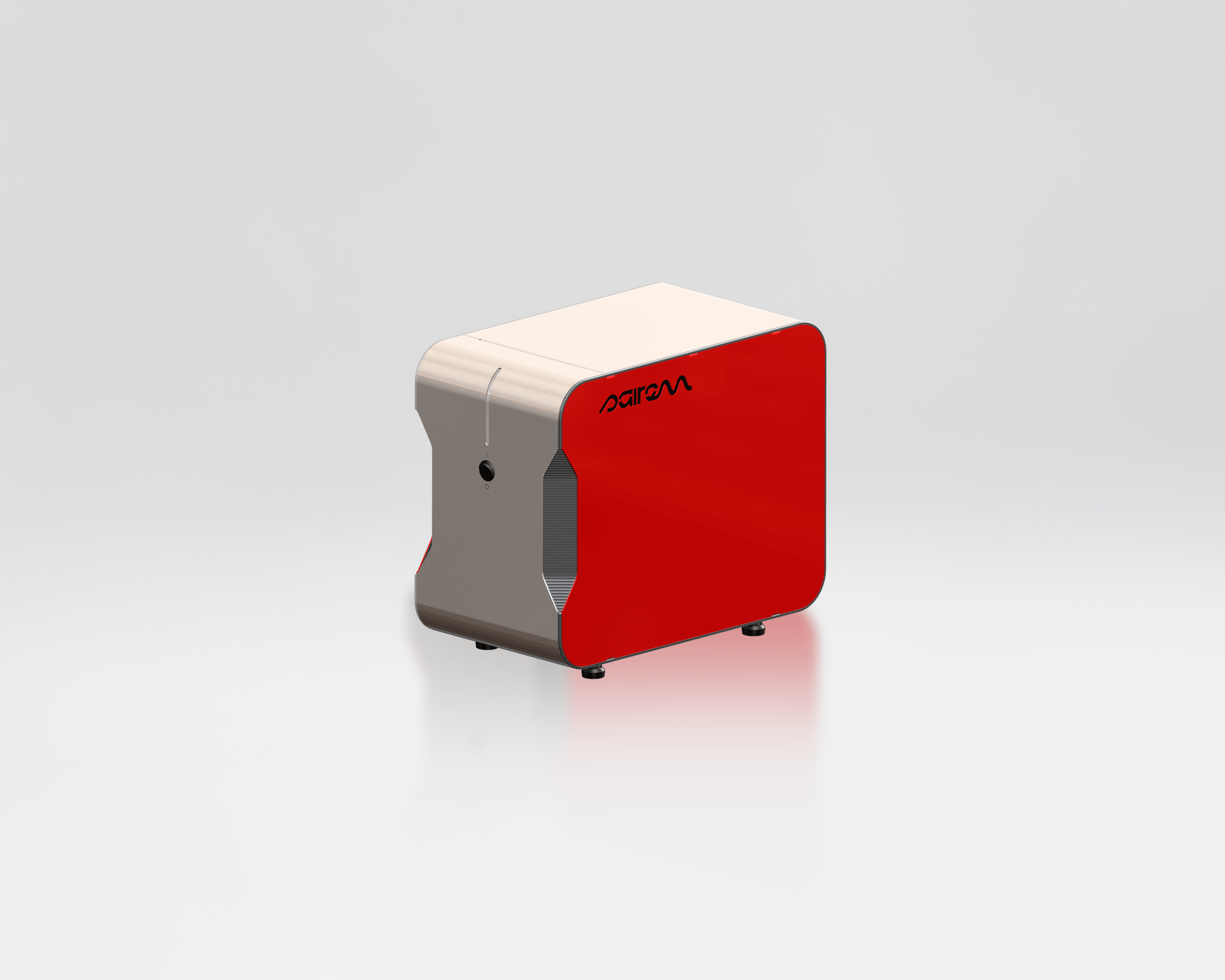
All-in-one solution for chemical research
MicroChem is a plug-and-play microwave reactor designed for laboratory and research applications.
Built on solid-state technology, it ensures precise microwave power delivery and enables frequency tuning to adapt to different materials and reaction conditions. This level of control allows researchers to work with accuracy and repeatability across a wide range of experiments.
Combined with optimized microwave field distribution, the system provides efficient and homogeneous energy transfer within the sample, whether working with liquids, solids, or gas-solid reactions.
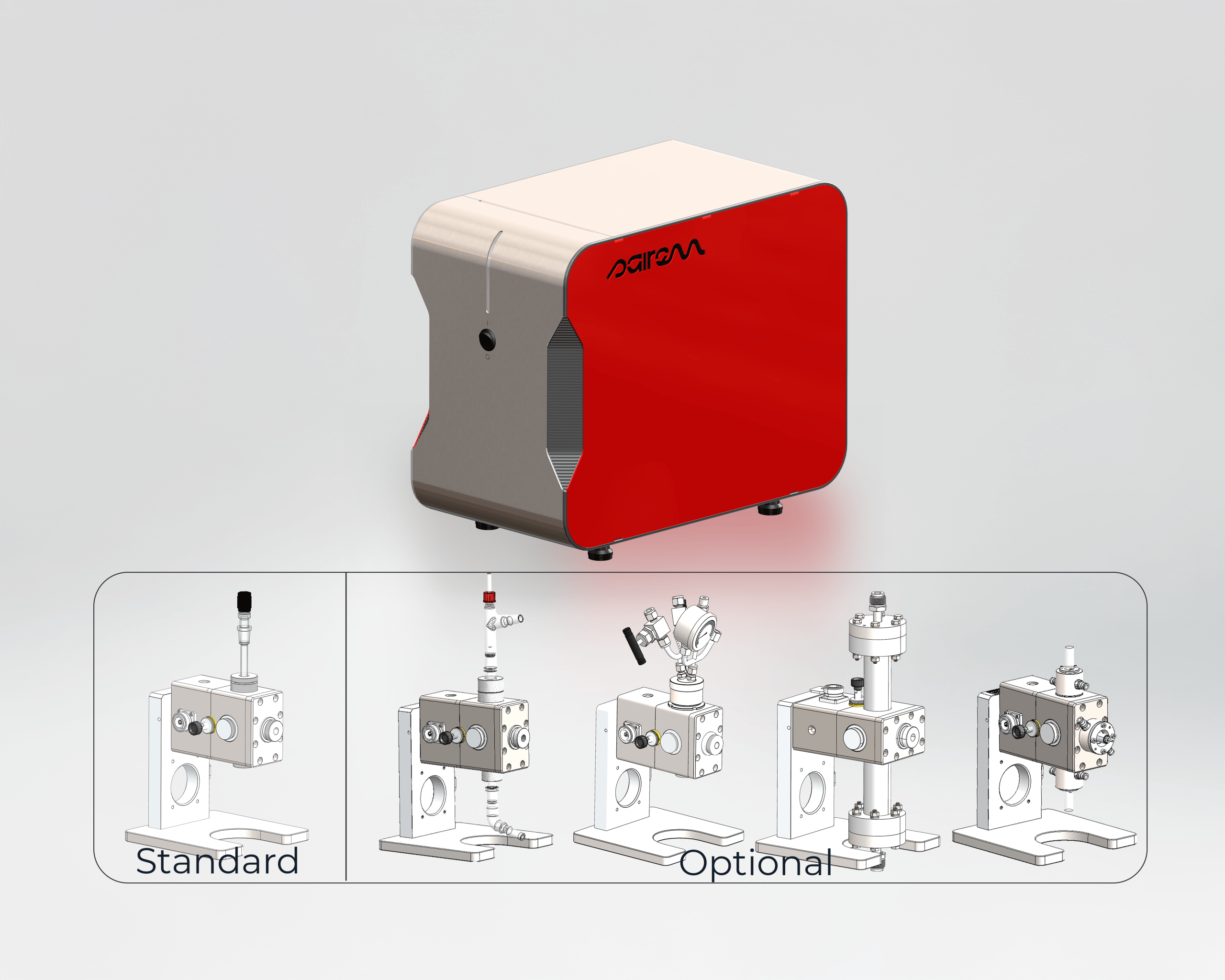
Optional cavities are available to adapt the system to different materials and research objectives.
For liquid, solid, gas-solid reactions
Designed to handle a wide range of chemical processes, the MicroChem system enables microwave treatment of liquids, solids, and gas-solid reactions.
Plug-and-play solution
Delivered as a complete, ready-to-use system (generator, cavity, sensors, software), MicroChem can be installed and operated quickly without complex setup, allowing immediate use.
Flexible treatment
With various cavities and adaptable configurations, making it adaptable to a wide variety of experimental protocols and research needs.
Compact design
Its compact design makes MicroChem easy to integrate into laboratory environments, while still providing advanced microwave capabilities for high-level research work.
Homogeneous heating
Microwave energy is coupled directly into the sample, ensuring uniform heating without surface-to-core gradients. The use of dedicated cavities with controlled field orientation allows optimization of heating uniformity.
Precise control of power
Solid-state technology enables fine adjustment of microwave power (down to 1 W resolution), along with real-time monitoring of forward, reflected, and absorbed power for highly reproducible experiments.
Frequency tuning
Continuous frequency adjustment ensures optimal coupling between the electromagnetic field and the material, reducing reflected power and improving energy absorption.
Optional cavities
A range of interchangeable cavities is available to adapt the reactor to different applications, including liquid, solid, gas-solid, high-pressure, and continuous flow configurations.
MicroChem reactor
Laboratory reactor with optional cavities
The system operates with solid-state generators, allowing fine adjustment of power levels and real-time monitoring of absorbed microwave energy. This ensures accurate and repeatable experimental conditions, which is essential for research and scale-up studies.
Key benefits:
- Fast sample screening
- Access to samples during runs
- Real time estimation of absorbed microwave power
- Control via laptop
- High-temperature and high-pressure (optional)
- Accurate power control
Standard cavity tilting – Optimization of the electric field orientation
A key feature of MicroChem lies in its cavity orientation for efficient homogeneous heating.
Change the orientation to irradiate the product either :
- In parallel, for samples with low absorption properties
- Perpendicularly, for samples with high absorption properties.
Optional cavities for different research conditions
- High-pressure conditions
- High-temperature gas reactions
- Continuous flow processing
Technological advantages
- 1 W step control of the applied MW power
- Frequency autotune for the efficient microwave interaction
- Control of reflected power
- Control of heating rates and isothermal modes
Some technical specifications
- Microwave generator: 0 to 200 W (with 1 W steps), air-cooled
- Frequency: 2400-2500 MHz at 0.1 MHz step (tuned manually and automatically)
- Electrical requirement: 100-260 V / 50-60 Hz
Standard kit delivered with accessories (pyrometer, kit of glasswares…)
Chemical research – Applications
Typical uses include:
- chemical synthesis
- polymerization and depolymerization
- pyrolysis
- extraction processes
- biomass and plastic decomposition
- gas-solid reactions such as hydrogen or ammonia production
- CO₂ desorption and catalytic reactions
Its ability to handle liquids, solids, and gas-solid systems makes it a valuable tool for both fundamental research and applied development.
Why choose MicroChem for chemical research?
MicroChem combines flexibility, precision, and ease of use in a single platform. It allows researchers to accelerate experimentation, improve reproducibility, and explore new reaction pathways under controlled microwave conditions.
With its modular design and advanced control capabilities, it supports both exploratory research and process optimization, making it a reliable tool for modern laboratories.
Want to know more? Your questions about MicroChem laboratory reactor, answered.
Here are answers to key questions about system benefits and SAIREM services.
MicroChem supports a wide range of applications, including:
-
chemical synthesis
-
pyrolysis and depolymerization
-
polymerization
-
extraction and digestion
-
CO₂ desorption
-
biomass and plastic decomposition
-
gas-solid reactions (e.g. hydrogen or ammonia production, CO oxidation)
It can handle liquid, solid, and gas-solid systems within the same platform.
Yes. MicroChem is a compact, air-cooled system (15.5 kg) with standard electrical requirements (100–260 V, 50–60 Hz).
It includes a full set of accessories (generator, cavity, sensors, software), making it a true plug-and-play solution for laboratory environments.
The system provides real-time monitoring of:
-
temperature
-
microwave frequency
-
forward, reflected and absorbed power
All parameters can be recorded and exported in .csv format, allowing full traceability and analysis of experiments.
MicroChem uses microwave energy to generate heat directly inside the sample, instead of transferring heat from an external source. This allows much faster heating, better control of temperature profiles, and more uniform energy distribution, especially for difficult materials such as solids or heterogeneous systems.
Unlike conventional reactors, it also provides real-time measurement of absorbed microwave power, giving direct insight into the energy actually delivered to the reaction.
Yes. The reactor is designed to allow direct access to the sample during the run.
You can:
-
add reagents
-
take samples (aliquots)
-
adjust experimental conditions
This is particularly useful for reaction monitoring and rapid screening.
Depending on the selected configuration, MicroChem can operate under:
-
up to 2 bar (standard flow setup)
-
up to 10 bar (batch high-pressure configuration)
-
up to 20 bar (continuous high-pressure setup)
Temperature ranges depend on the setup:
-
up to 200°C with fiber optic measurement
-
above 200°C with pyrometer
-
up to 1000°C for gas-solid high-temperature applications
Let’s improve your research process performance
Our experts are here to assist you in finding the best solution.