


 > Case studies >
Ready meals pasteurization using microwave technology:
Meeeting environmental and consumer requirements
The ready meals market is currently experiencing strong international growth, with an annual increase of around 6%. This trend is fueled by changing consumer expectations: healthier, safer, and higher-quality food products.
To address these challenges, SAIREM and CTCPA conducted a comparative study between traditional retort pasteurization and microwave treatment.
New concerns for consumers of ready meals
A large majority of consumers (67%) changed their eating habits for a healthier diet. They are now more attentive to the nutritional value of the products they consume and tend to avoid foods that are overly fatty, salty, or sweet, as well as those containing additives or controversial preservatives.
The increasing demand for ready meals therefore does not reflect lower standards. Quality, taste, and texture are increasingly critical.
Health and safety concerns in ready meals pasteurization
Beyond sensory aspects, food safety is a growing concern. Consumers are more aware and selective, favoring ready meals that are both safe and nutritious. Fresh ready meals are often preferred, especially if provided that safety and shelf life can be guaranteed
Supporting food manufacturers with industrial pasteurization Manufacturers use different methods to produce ready-to-eat meals: frozen, cook-and-chill, pasteurized products with retorts. While consumers prefer fresh, traditional technologies have drawbacks: short shelf life, high waste, and quality deterioration…
Pasteurization offers a relevant solution. It extends shelf life while preserving the freshness of food. Among available technologies, retort pasteurization is well established, but microwave pasteurization offers significant advantages for food manufacturers.
Why is ready meal pasteurization using microwave technology better than retort?
Retort pasteurization remains the most established method. However, microwave pasteurization is emerging as a promising alternative, combining efficiency, product quality and environmental benefits. Comparative studies reveal clear differences between the two technologies.
Reliable results with SAIREM microwave pasteurizer
The study conducted by CTCPA on ready meals demonstrated excellent results with microwave pasteurization:
- Shelf life extended to a minimum of 25-30 days, depending on processing parameters,
- Recent trials achieving 45-60 days with certain recipes.
- Compliance with microbiological safety requirements for pathogens such as E. coli, Listeria monocytogenes, Salmonella, and Bacillus cereus
Consumer panels also confirmed the benefits of microwave technology:
- 74% of consumers who tried the microwave-pasteurized ready meals (salmon, mashed potatoes, and green beans) said they would eat them again, compared to 54% for retort meals.
- 59% preferred microwave pasteurized meals compared to 25% for retort
- Benefits most cited: color, taste, texture.
Why choose ready meal pasteurization using microwave technology?
Compared to retort, SAIREM microwave solution offers:
- Lower energy use: retort consumes 1.4 times more
- Reduced operating costs and maintenance
- Smaller environmental footprint
Key benefits of SAIREM microwave systems
In addition to producing meals that are highly appreciated by consumers, the SAIREM microwave system offers many significant advantages:
- Compatible with all types of tray: cardboard, paper, thermoformed trays, wood, glass, etc. (patented solution)
- Flexible, fast, continuous and homogeneous processing
- Guaranteed traceability
- Thermal repeatability and consistent quality for each batch
- >80% energy efficiency and reduced carbon emissions
Test our food processing solutions
Interesting in testing industrial microwave or radio frequency technology to optimize your food processing performance?
SAIREM’s microwave equipment for food pasteurization
To meet your production needs for the pasteurization of ready-to-eat meals, SAIREM has developed a flexible modular industrial pasteurizer that scales from 200 kg/h to 2 t/h.
Our microwave pasteurization systems require minimal maintenance and feature easy-clean design, reducing operation costs and downtime.
SAIREM’s range delivers the flexibility and efficiency needed to process diverse products – ready-to-eat meals, fruit jars and prepared foods – according to your specific requirements.
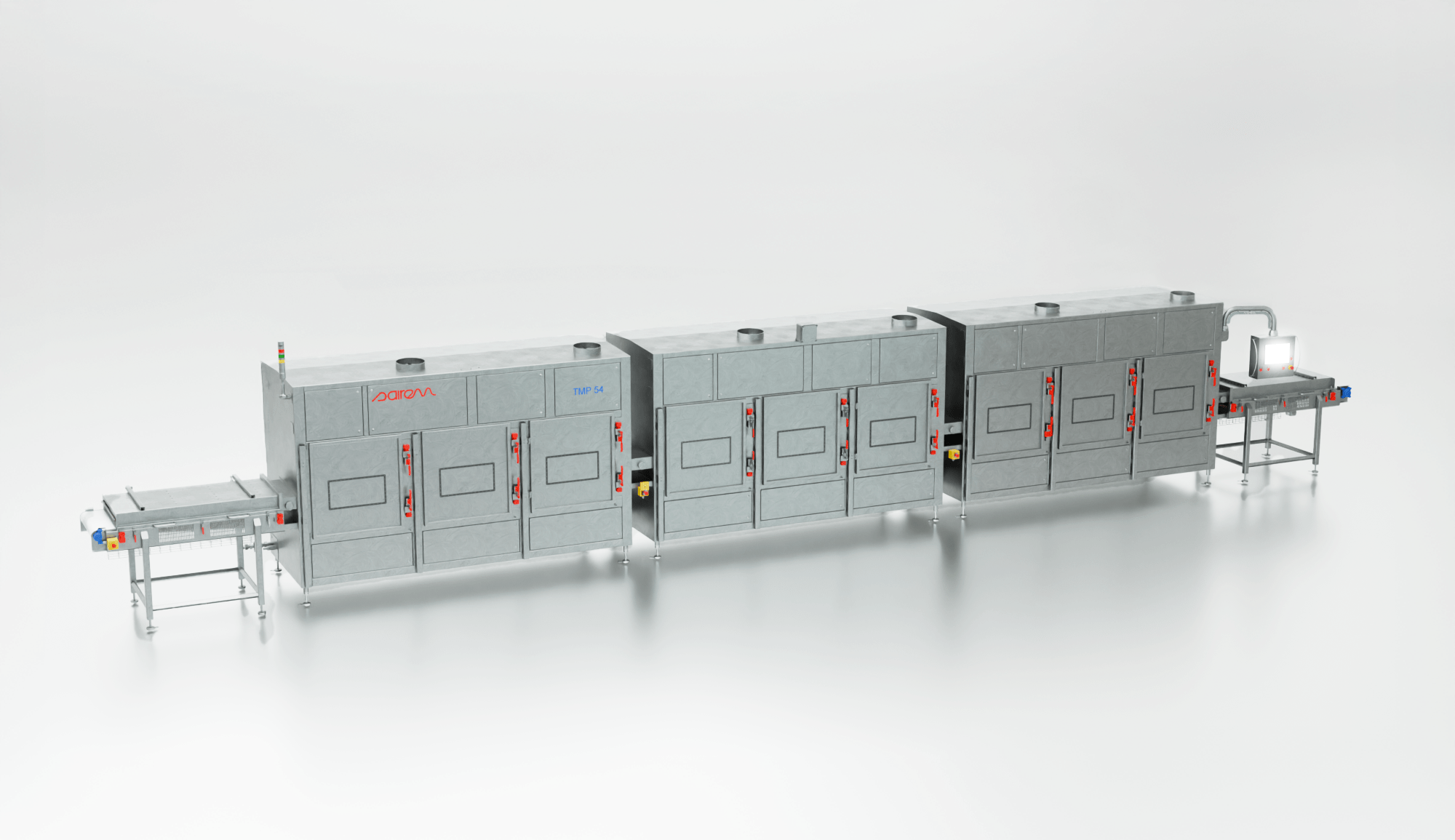
Microwave pasteurization is an innovative process that heats food quickly and evenly above 75°C, extending shelf life while preserving taste, texture, and nutritional value.
Unlike retort, which requires water, gas, and longer processing times, microwave pasteurization uses only electricity, is faster, more energy efficient, and delivers better product quality.
Yes. SAIREM’s microwave pasteurization systems are compatible with a wide range of packaging materials, including cardboard, paper, molded fiber, glass, and wood. This makes it possible for food manufacturers to use sustainable and recyclable packaging without compromising food safety, shelf life, or product quality.