


Lab-scale heating with microwave technology
Why choose microwave heating for research applications?
SAIREM offers a range of laboratory-scale equipment for heating applications, allowing tests to be carried out directly on real products and materials under controlled conditions.
Microwave and radio-frequency technologies are particularly well suited for rapid and homogeneous heating, whereas their volumetric nature enables a precise control of temperature profiles and heating kinetics.
SAIREM’s pilot-scale solutions then provide the necessary bridge to industrial implementation, enabling process validation under representative production conditions.
Key advantages of microwave heating

Rapid internal heating
Because energy is deposited directly within the material, temperature rises are almost instantaneous. This is particularly valuable when studying fast reactions or thermally sensitive compounds.

Reduced thermal gradients
Unlike conventional furnaces, where heat propagates from the surface inward, microwave heating limits temperature differences within the sample. As a result, experimental conditions are more reproducible.

Fine control of heating profiles
Power can be adjusted in real time, whereas pulsed modes allow specific heating sequences. This makes it possible to investigate reaction pathways, kinetics or phase transitions with precision.

Relevant data for scale-up
Laboratory systems are designed to generate consistent and transposable results. In other words, they allow you to move from feasibility studies to pilot-scale validation with a high level of confidence.
Microwave heating equipment
Precise and homogeneous heating for research applications.
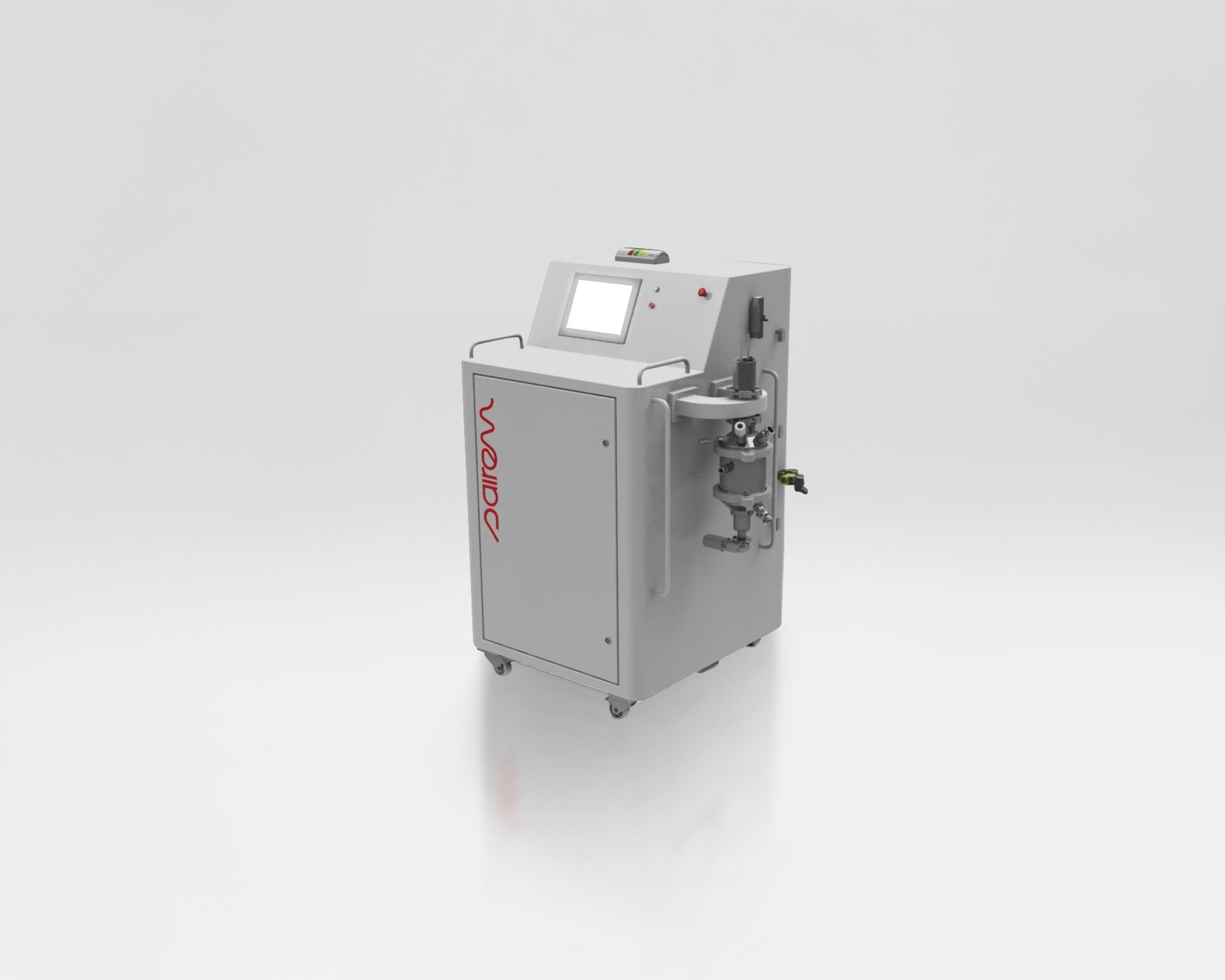
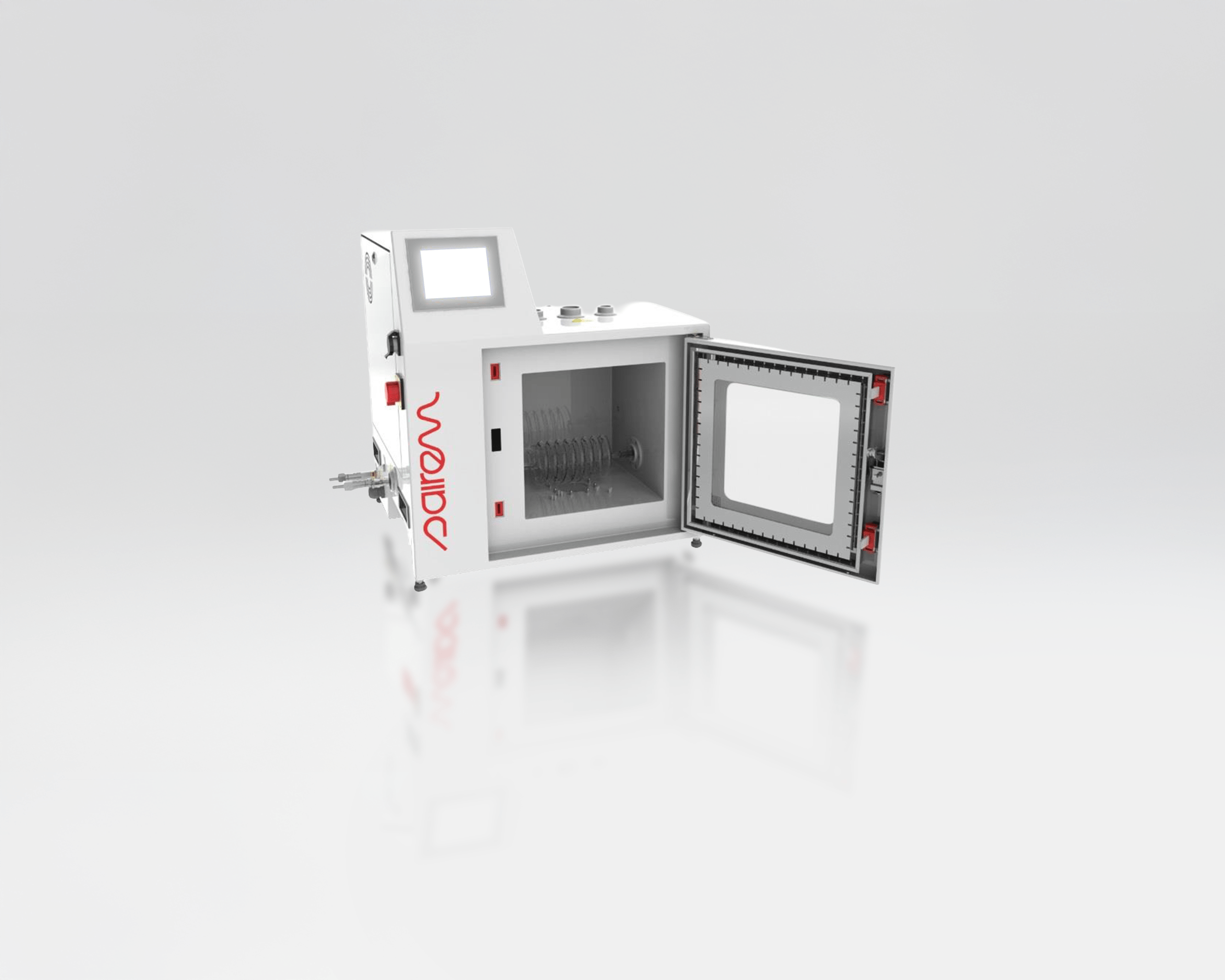
The LaboTherm is a microwave heating equipment designed for laboratory applications, enabling precise and reliable testing on a wide range of products. It allows users to evaluate heating performance, optimize process parameters, and assess product behavior under controlled conditions.
Compact and easy to operate, the LaboTherm is an ideal solution for feasibility studies and early-stage development before scaling up to pilot or industrial production.
The LaboBox range is a compact and versatile microwave system designed for microwave-assisted synthesis, catalysis and heating. Operating at 2450 MHz with up to 2 kW of adjustable power, it ensures rapid and controlled heating, while its optimized cavity design provides a highly uniform electromagnetic field for reliable and reproducible results.
Compatible with both batch and continuous reactor configurations, the LaboBox enables the processing of liquid, solid and gas-phase reactions under homogeneous or heterogeneous conditions.
Equipped with advanced control features, including real-time monitoring of power and temperature, as well as gas flow regulation, the system offers precise control over reaction parameters.
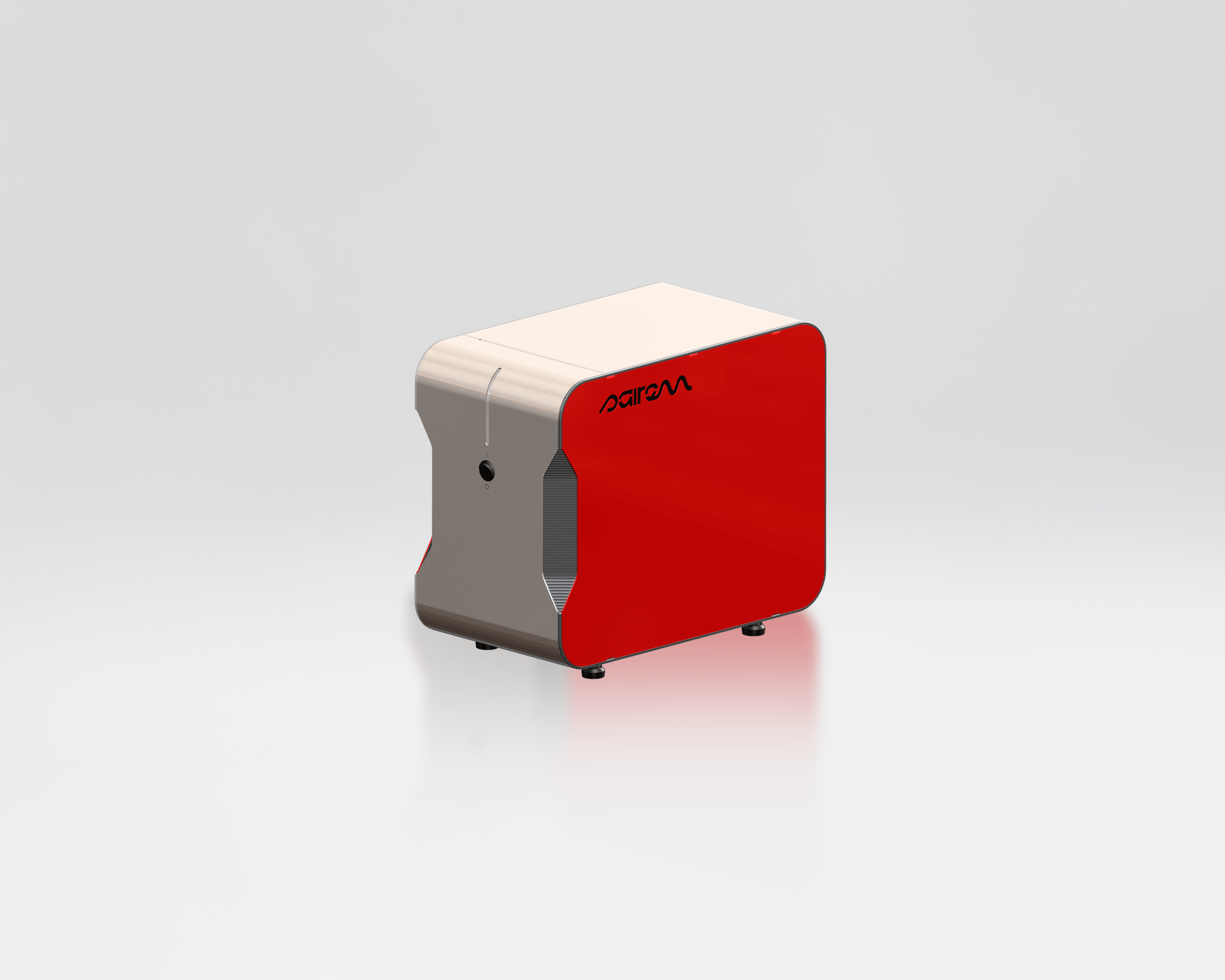
The MicroChem is a plug-and-play microwave reactor designed for laboratory and research applications.
Built on solid-state technology, it ensures precise microwave power delivery and enables frequency tuning to adapt to different materials and reaction conditions. This level of control allows researchers to work with accuracy and repeatability across a wide range of experiments.
Combined with optimized microwave field distribution, the system provides efficient and homogeneous energy transfer within the sample, whether working with liquids, solids, or gas-solid reactions.
Here’s a questions-and-answers section about microwave heating.
Because the heating mechanism is fundamentally different. In a conventional furnace, heat diffuses from the outside to the inside, which inevitably creates gradients. With microwaves, energy is coupled directly into the material. As a result, heating can be both faster and more uniform, which is critical when studying kinetics or phase transformations.
Not necessarily. While volumetric heating reduces gradients, the actual temperature distribution depends on dielectric properties, sample geometry and field distribution inside the cavity. This is why laboratory systems are carefully designed, often with mode stirrers or turntables, to improve field homogeneity.
Reactions involving polar molecules or ionic species tend to respond particularly well, since they couple efficiently with the electromagnetic field. This includes many liquid-phase reactions, but also solid-state processes where diffusion or activation energy plays a key role.
Yes, but not directly. Materials with low dielectric losses—such as certain ceramics at room temperature—can be heated using hybrid approaches. For instance, a susceptor (like silicon carbide) can first absorb microwave energy and transfer heat to the sample. As temperature increases, the material itself may start coupling more effectively.
Yes, provided that the key parameters, such as power density, field distribution and material properties, are properly understood. Laboratory microwave systems are specifically designed to generate reliable data for scale-up, although this step always requires careful validation.
Do you need help improving your research process?
Our experts are here to assist you in finding the best solution!