


Designed for reliable and reproducible results for efficient R&D and scale-up.
Synthesis and catalysis with microwave technology
Why use microwave synthesis and catalysis technology?
Microwave-assisted synthesis and catalysis, often referred to as microwave synthesis and catalysis, exploit the selective heating properties of microwaves, meaning that the specific product or region to be heated can be targeted, whereas volumetric heating uniformly affects a liquid or material of several centimeters in thickness.
This targeted approach leads to a drastic reduction in reaction time and energy consumption, as well as increased production yield and process flexibility. Last but not least, the shifting of reaction equilibria helps limit the formation of undesired by-products and co-products, enhancing overall reaction efficiency.
Key advantages of microwave synthesis and catalysis

Drastically reduced reaction times
Microwave heating enables very rapid temperature rise within the reaction medium, significantly accelerating reaction kinetics.
Many reactions that require hours under conventional heating can be completed in minutes, mainly because energy is delivered directly to the reactants rather than through slow heat transfer.

Selective and volumetric heating
Microwaves heat materials based on their dielectric properties, allowing selective energy absorption within specific phases (catalyst, solvent, or reactant).
This leads to:
- localized heating (“hot spots”) at catalytic sites
- improved reaction pathways and selectivity

Improved catalyst properties and performance
Microwave-assisted synthesis can produce catalysts with:
- higher surface area
- better crystallinity
- more uniform distribution of active sites
These structural improvements directly enhance catalytic activity and stability.

Energy efficiency and greener chemistry
Microwave processes reduce energy consumption by heating only the reaction medium, not the surrounding equipment.
They also:
- reduce solvent use
- limit side reactions
- align with green chemistry principles
Microwave synthesis and catalysis equipment
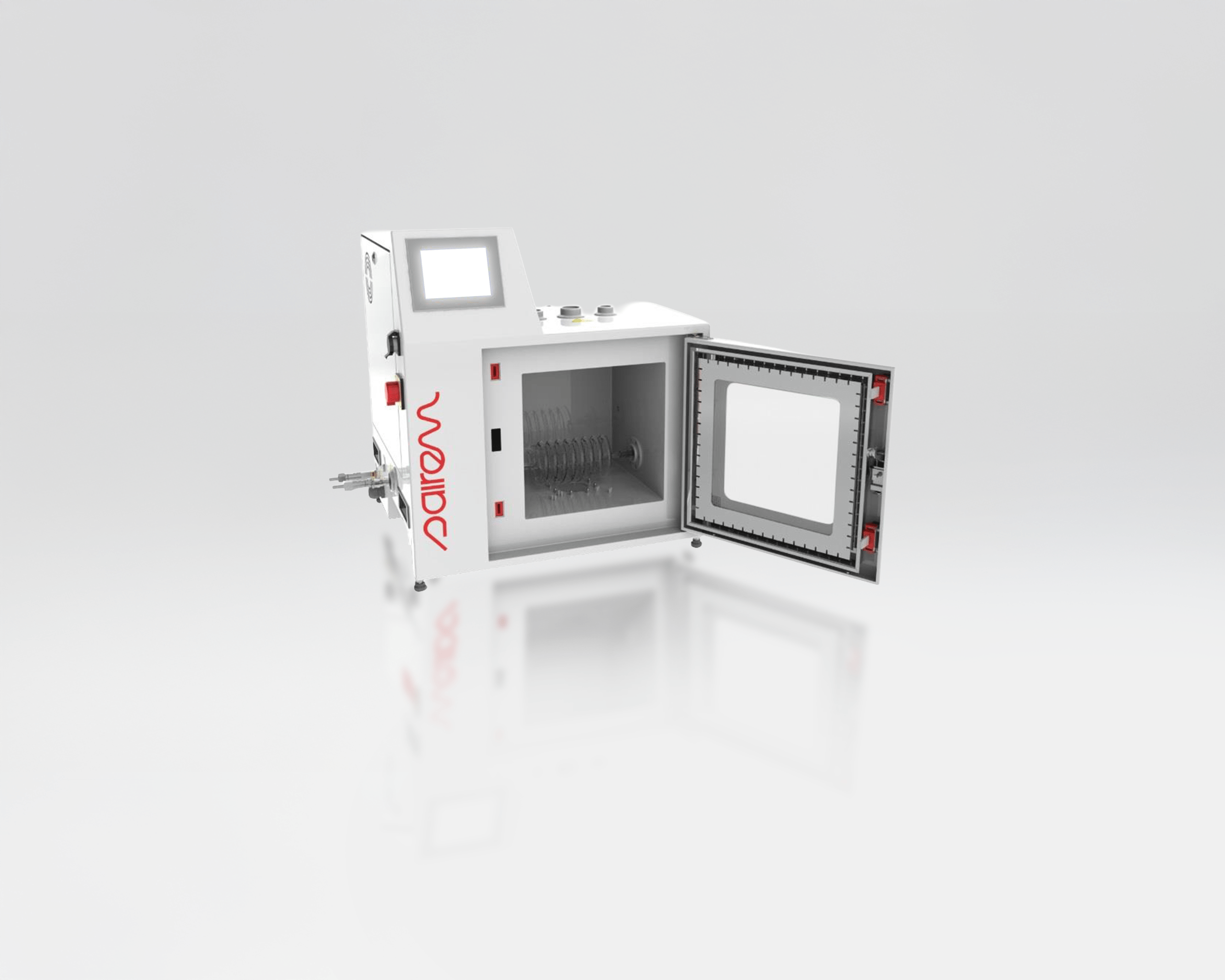
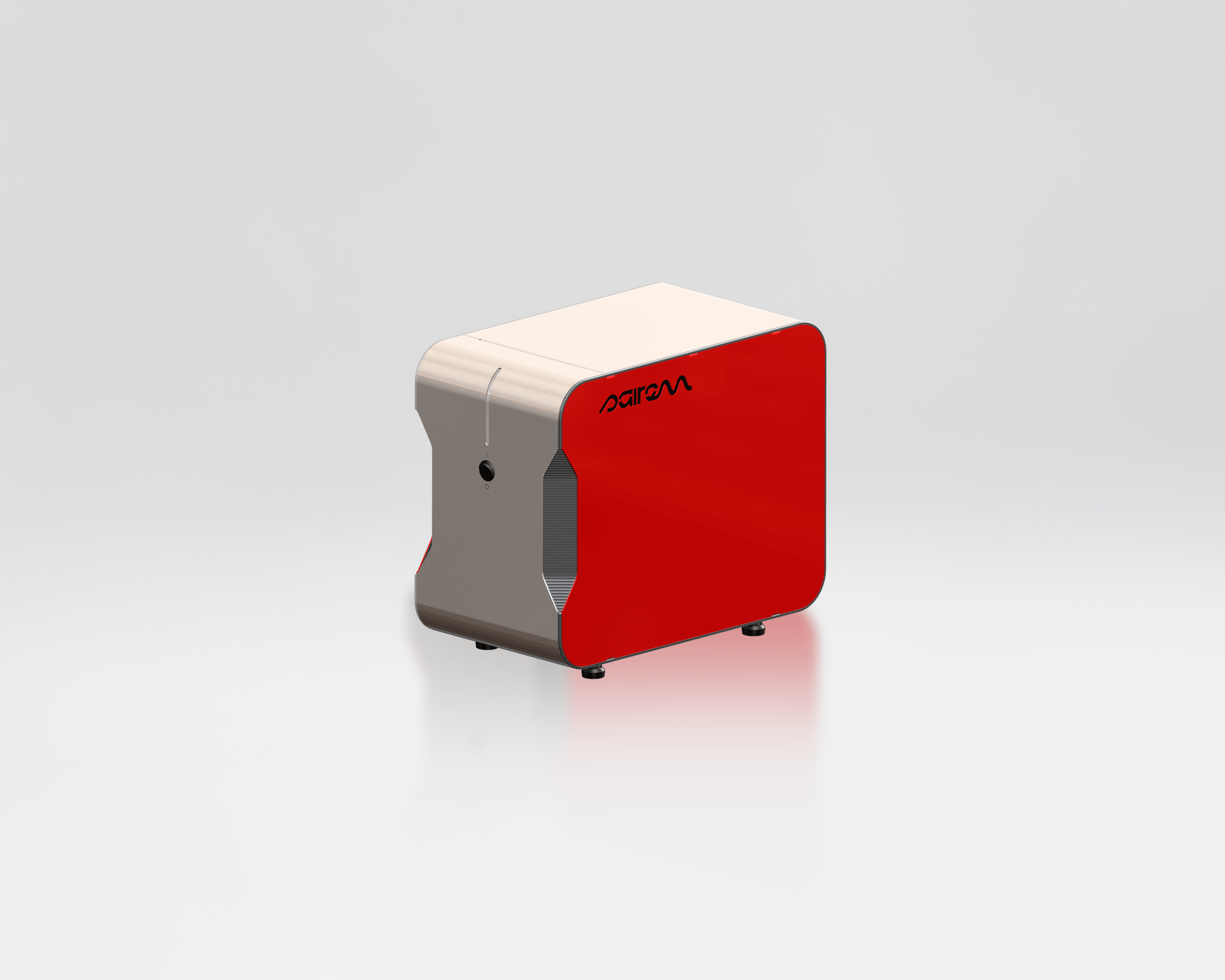
The LaboBox range is a compact and versatile microwave system designed for microwave-assisted synthesis, catalysis and heating. Operating at 2450 MHz with up to 2 kW of adjustable power, it ensures rapid and controlled heating, while its optimized cavity design provides a highly uniform electromagnetic field for reliable and reproducible results.
Compatible with both batch and continuous reactor configurations, the LaboBox enables the processing of liquid, solid and gas-phase reactions under homogeneous or heterogeneous conditions.
Equipped with advanced control features, including real-time monitoring of power and temperature, as well as gas flow regulation, the system offers precise control over reaction parameters.
The MicroChem is a plug-and-play microwave reactor designed for laboratory and research applications.
Built on solid-state technology, it ensures precise microwave power delivery and enables frequency tuning to adapt to different materials and reaction conditions. This level of control allows researchers to work with accuracy and repeatability across a wide range of experiments.
Combined with optimized microwave field distribution, the system provides efficient and homogeneous energy transfer within the sample, whether working with liquids, solids, or gas-solid reactions.
Here’s a questions-and-answers section about our synthesis and catalysis solutions, with microwave technology.
Conventional heating relies on heat transfer by conduction or convection, which creates temperature gradients between the surface and the core.
Microwave heating is volumetric: energy is absorbed directly by molecules (dipolar rotation and ionic conduction), leading to faster and more uniform heating.
Reaction rates increase because the system reaches the target temperature much faster.
In some cases, localized heating at catalytic sites can further enhance reaction kinetics and reduce activation barriers.
Yes, in many cases. Microwave heating can reduce side reactions and improve selectivity due to:
- controlled heating rates
- selective energy absorption
- shorter reaction times
However, the effect depends on the reaction system and materials involved.
Yes. It is widely used to prepare heterogeneous catalysts with improved properties such as:
- smaller particle size
- higher dispersion
- better crystallinity
These features often lead to enhanced catalytic performance.
Yes. Since energy is delivered directly to the reaction medium, losses are minimized.
This results in lower overall energy consumption compared to conventional thermal methods.
Yes. Microwave-assisted catalysis is increasingly used in:
- chemical synthesis
- biomass and plastic conversion
- gas treatment (NOx, SOx, H₂S)
It is considered a promising route for process intensification and energy-efficient chemical production.
Complete process control with SAIREM microwave equipment
Our high performance tools are designed to help you understand your process and identify critical parameters. Thanks to the unique interface we developed with Labview, they allow continuous control and monitoring of the forward power, the reflected power, the temperature and pressure.
Created by chemical scientists, expert in microwaves, they will allow you to monitor and fully document your process.
Do you need help improving your research process?
Our experts are here to assist you in finding the best solution!